Six Months to Become a Field Guide – but what happens until 21?
Your child can qualify as a field guide at 18 or 19. But does that mean they’re ready to start a career? There’s an important difference every parent should understand.
Your teenager loves wildlife, the outdoors and the idea of making a living doing something they genuinely enjoy.
Then comes the advertisement: Become a qualified field guide in just six months! Spend your days in the bush, experience incredible wildlife and start an exciting new career.
Some training programmes even advertise employment guarantees. It sounds wonderful. And the guiding industry really can offer an extraordinary career. But before investing in your child’s future, there’s a question worth asking:
What happens after those six months?
The age restriction many parents don’t know about
Here’s something that can come as quite a surprise.
In South Africa, you must be at least 21 years old to obtain the Professional Driving Permit (PrDP) required to transport guests on guided game drives.
This isn’t a training provider’s rule. It’s a legal requirement.
That means an 18-year-old who completes a six-month field guide course might leave with a perfectly legitimate qualification, but still be unable to perform one of the most important duties of a traditional safari guide for another two years or more.
There are guiding opportunities that don’t involve driving guests, and some young graduates may find suitable work in other areas of the industry. But many of the lodge-based guiding positions that aspiring safari guides dream about require a PrDP.
Even FGASA specifically cautions training providers that this age restriction can prevent younger graduates from securing certain guiding jobs.
So, if your child qualifies at 18 or 19, what is the plan until they’re 21?
Is qualifying as quickly as possible really the best strategy?
Let’s be clear: short courses are not necessarily poor courses.
A six-month programme can provide excellent foundational training and a recognised qualification. For someone who is already 21, particularly an adult changing careers, that may be exactly what they need.
But for a school leaver, the situation is different. If they cannot yet take up many of the traditional guiding positions, is there really an advantage to getting through their training as quickly as possible?
Or could those intervening years be put to better use?
Imagine what a young person could accomplish with additional field experience, advanced wildlife knowledge, specialist qualifications, communication skills and professional development before they turn 21.
They could arrive at that first job interview with considerably more than an entry-level certificate.
Of course, longer training isn’t automatically better training either. What matters is how effectively that time is used.

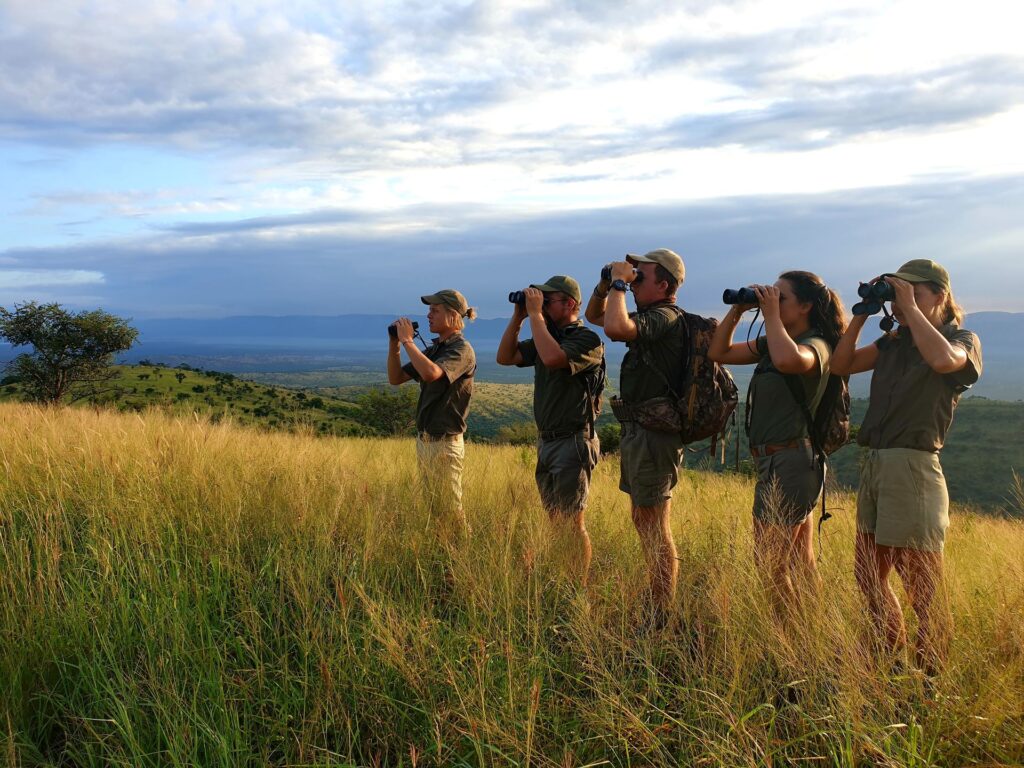


The real question isn’t how quickly someone can qualify. It’s how well they’ll be prepared when meaningful employment opportunities become available.
A work placement is not necessarily a job
Another distinction deserves closer attention. When training providers advertise employment guarantees or placements, it’s important to understand precisely what is being offered.
A six-month unpaid placement at a lodge can provide useful industry exposure. Students may learn valuable lessons about lodge operations, guest service and working as part of a hospitality team.
But practical work experience and paid employment are not the same thing. And spending six months working at a lodge doesn’t necessarily mean spending six months developing professional guiding skills.
Parents should ask:
- Will my child actually be guiding, observing experienced guides or primarily performing other lodge duties?
- Is the placement paid, unpaid or supported through accommodation and meals?
- Who will mentor and assess their development?
- If employment is guaranteed, what are the age restrictions, conditions and exclusions?
These aren’t unreasonable questions. They’re essential ones when making a substantial investment in education.
A certificate is a starting point, not a career
Good guiding requires a great deal more than passing a theory examination and recognising wildlife species.
A professional guide must communicate confidently with guests, make sound decisions, interpret nature meaningfully, manage risks and work effectively with colleagues.
They need field experience, sound judgement and the ability to remain professional when things don’t go according to plan.
These qualities don’t develop overnight.
And while much can be learned during an intensive course, there is also enormous value in structured practice, feedback, mentorship and exposure to different environments.
The guiding industry offers wonderful opportunities. It also has its challenges, including demanding working conditions, junior salaries and competition for desirable positions.
We owe young people an honest introduction to both sides.
Make the years between 18 and 21 count
At Bhejane Nature Training, we believe young people should have the opportunity to build a genuine foundation for a career in nature guiding and wildlife conservation.
That’s why we offer different career-development pathways, including our One-Year Career Development Course and Three-Year Advanced Nature Guiding & Wildlife Conservation programme.
These programmes combine recognised guiding qualifications with practical experience, specialist learning and the development of important workplace skills.
Our longer programme provides an opportunity for young people to continue developing their abilities, confidence and professional experience during those formative years.
That doesn’t mean everyone needs three years of training, or that a one-year qualification has no value. The appropriate route depends on the student’s age, goals, circumstances and plans for further development.
And no amount of training can guarantee a rewarding job or replace the determination needed to build a successful career.
But we believe those early years can be used for far more than simply waiting to turn 21.
Before you enrol, ask one final question.
Not just:
“How soon will my child qualify?”
But:
“What will my child be doing at 19 and 20, and how well prepared will they be to begin their career at 21?”
That answer might be worth far more than a promise of a qualification in six months.
Considering a career in nature guiding? Explore Bhejane Nature Training’s one-year and three-year career-development programmes and discover a training pathway that matches your ambitions.
Posted on: 19 October, 2026 by the Bhejane Tribe