How to Become a Field Guide in South Africa.
“What qualifications do I need to become a field guide?”
If you’ve started researching a career in the safari industry, you’ve probably found yourself swimming in acronyms.
FGASA.
IFGA.
NQF.
CATHSSETA.
PDP.
First Aid.
Apprentice Trails.
Marine Guide.
Specialist Birding.
It’s enough to make anyone wonder where they’re actually supposed to begin. The good news? The pathway into professional guiding is much simpler than it first appears.
At Bhejane, we’ve always looked at the journey a little differently. Rather than asking,
“Which qualification should I get first?”
we encourage prospective students to ask a different question.
“What kind of guide do I want to become?”
Because once you answer that question, the pathway becomes much clearer.
Think Beyond Qualifications
One of the biggest mistakes aspiring guides make is believing that collecting qualifications is the goal.
It isn’t. Qualifications are important. They’re the foundation of your career. But they are only the beginning.
The real goal is to become the kind of guide that safari lodges trust, guests remember and colleagues enjoy working alongside.
Qualifications open the first door.
The career you build afterwards is what really matters.
At Bhejane, we believe professional development happens in three stages:
- Foundation
- Development
- Professional Experience
This philosophy has helped many of our graduates build rewarding careers throughout the safari industry.
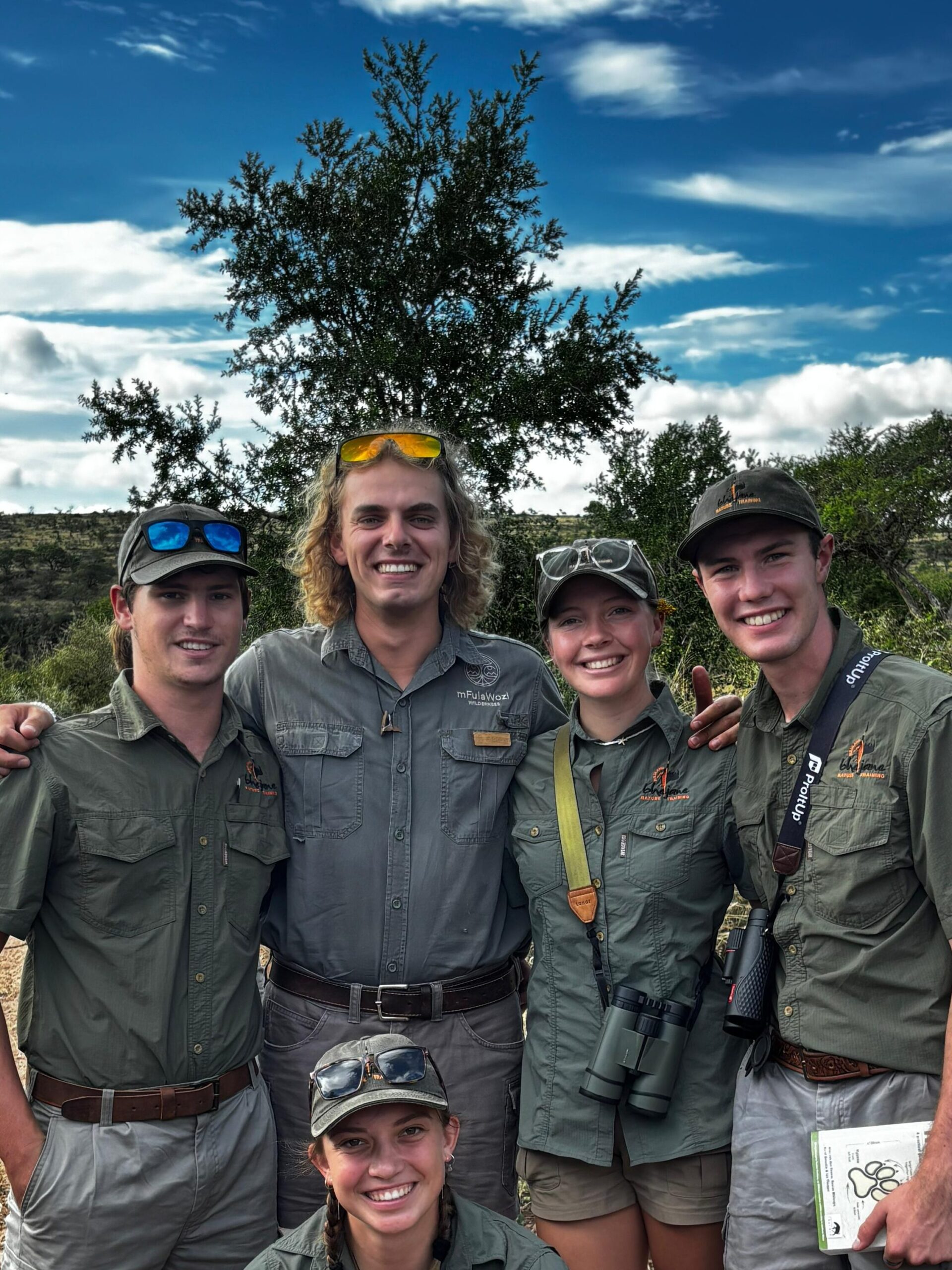
Stage One: Foundation
Every successful guide begins by mastering the fundamentals.
This is where you develop the knowledge, practical skills and recognised qualifications needed to begin your career safely and professionally.
A strong foundation typically includes:
- NQF Level 2 Nature Site Guide qualification
- Apprentice Trails Guide training (FGASA)
- First Aid certification
- Practical guiding experience
- Exposure to a variety of habitats and ecosystems
- An introduction to specialist fields such as Marine Guiding and Birding
Notice we say introduction.
One of the biggest mistakes aspiring guides make is trying to choose a speciality before they’ve experienced the profession.
How do you know you’ll love birding if you’ve never spent a morning with an experienced birder?
How do you know you’ll enjoy trails if you’ve never walked in Big Five country?
Your first year shouldn’t be about deciding what specialist you’ll become.
It should be about discovering what genuinely excites you.
At Bhejane, we don’t ask students to choose a speciality on day one.
We help them discover it through experience.
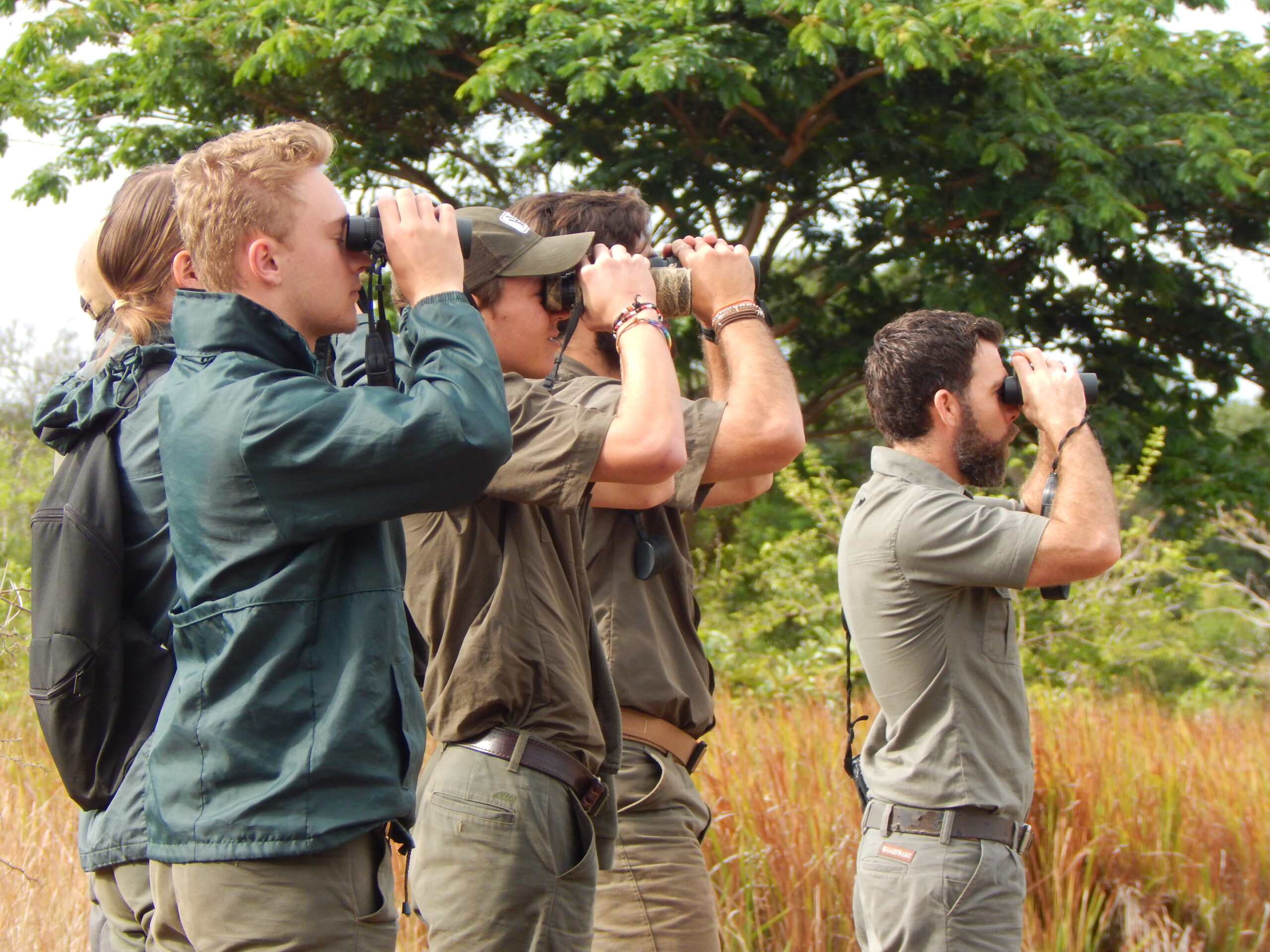
Understanding FGASA, IFGA and the Different Organisations
One of the biggest sources of confusion for prospective students is understanding how the different organisations fit together.
Let’s simplify it.
FGASA (Field Guides Association of Southern Africa) has been the benchmark for professional field guiding in Southern Africa for decades. It has played a central role in developing professional guiding standards and qualifications and is now recognised as the official professional body for field guides in South Africa.
Because of this long history, FGASA qualifications remain the most established, widely recognised and most frequently requested by employers throughout Southern Africa.
More recently, the International Field Guides Association (IFGA) has introduced another professional qualification pathway. While it is a newer organisation, it provides an additional option for guides who may wish to pursue guiding.
The important thing to remember is this:
Employers don’t hire logos. They hire people.
No matter which qualification pathway you follow, employers are looking for guides who combine recognised qualifications with professionalism, practical experience, curiosity and the ability to create exceptional guest experiences.
Stage Two: Development
One of the questions we’re often asked is why our Advanced Career Development Programme includes two years of full-time training before students move into industry.
The answer is simple.
Because becoming qualified and becoming professionally ready are not always the same thing.
At Bhejane, we believe there is an important stage between learning and employment.
A stage where confidence, judgement and professionalism are developed through meaningful real-world experience while students are still supported by experienced mentors.
We call this the Development Phase.
This is not simply another year of classroom learning.
Students begin applying their skills in authentic situations.
They guide visiting school groups.
They assist with local environmental education programmes.
They help host Sea School activities.
They participate in wildlife monitoring and conservation projects, including annual game counts on neighbouring reserves.
They work alongside experienced instructors while taking increasing responsibility for real guests and real conservation projects.
They plan and host events, develop activities and learn to problem-solve by trial and error.
Every one of these experiences develops confidence, communication skills, professionalism and sound decision-making while students still have mentors available to coach, challenge and support them.
Rather than simply learning about the profession…
They begin living it.
Stage Three: Professional Experience
Only once students have built a strong foundation and developed confidence through mentored experience do they move into industry placement.
By this stage they have already worked with guests.
They have already represented Bhejane professionally.
They have already participated in conservation work.
They have already learned what it means to be accountable to colleagues, guests and conservation partners.
Industry placement is no longer the beginning of their professional development.
It becomes the next step in it.
That transition often allows graduates to contribute with confidence from their very first position.
Why We Believe This Matters
We’ve watched many graduates begin their careers convinced they wanted one thing, only to discover a completely different passion once they entered the profession.
Some thought they wanted to become photographers and discovered a love for birding.
Others found themselves drawn to conservation and wildlife monitoring.
Some realised they loved mentoring young guides.
Others went on to become reserve managers.
That’s why we believe exploration should come before specialisation.
Experience has a wonderful way of revealing strengths you never knew you had.
Vocational Training or University: Which Path Is Right for You?
If your dream is to work in wildlife tourism, conservation or the safari industry, it’s natural to wonder whether you should study at university or enrol in a professional guiding programme.
The answer depends entirely on the career you want to build.
Professional field guiding is first and foremost a vocational profession. Like becoming a pilot, chef or paramedic, it requires deep knowledge, but that knowledge must be continually applied in real-world situations.
At Bhejane, our students spend many hours studying ecology, animal behaviour, conservation, birding and tracking. The difference isn’t how seriously we take the knowledge—it’s how we teach it.
Rather than writing lengthy academic dissertations, students are continually challenged to apply what they’ve learned while guiding, solving problems, interpreting the environment and communicating with guests.
For students whose long-term goal is research, academic ecology or postgraduate study, university may be the more appropriate pathway.
For those whose goal is to become an outstanding professional guide or build a career within wildlife tourism, we believe a vocational approach provides the strongest preparation. Guiding can be an excellent stepping stone to other career paths in conservation and wildlife tourism. Conversely we have often had university graduates coming to us to get a guiding qualificaitons just to get into the field. The vocational route almost certainly is the one that offers more practical employment options.
Rather than studying nature simply to pass examinations or complete academic assignments, our students are constantly challenged to apply what they learn in real guiding situations. Employers are accutely aware of this.
Understanding elephant behaviour isn’t just about remembering facts.
It’s about making safe decisions while walking on foot.
Learning bird identification isn’t simply about recognising species.
It’s about using birds to interpret the landscape, enrich a guest’s experience and become a better observer of nature.
Studying ecology isn’t an abstract academic exercise.
It becomes the framework through which students begin understanding why animals behave the way they do, why habitats change and how conservation decisions are made.
We believe knowledge is most valuable when it changes the way you see the natural world.
That is why our programme combines rigorous learning with continual practical application.
Students leave with a strong understanding of nature—but more importantly, they leave knowing how to use that knowledge to become better guides.
For those whose long-term goal is research, ecology or academia, there are excellent higher education pathways available.
Our mission is different.
We exist to develop exceptional professional field guides.
That means combining deep knowledge with practical judgement, communication skills and real-world experience.
Because the best guides don’t simply know more.
They see more.
An Important Consideration for School Leavers: Your PDP
One of the most common questions we receive from school leavers and their parents isn’t actually about guide training.
It’s about the Professional Driving Permit (PDP).
Most field guiding positions involve driving guests on safari. As a result, many employers expect guides to hold both a valid driver’s licence and a Professional Driving Permit (PDP).
In South Africa, you can only apply for a PDP once you are 21 years old.
This means many students who begin training immediately after leaving school can complete their guiding qualifications before they are legally able to obtain a PDP.
That doesn’t mean you can’t start building your career.
It does mean, however, that your employment options may be more limited until you become eligible for your PDP, particularly if the role involves transporting guests.
This is one of the reasons we’ve deliberately structured our Advanced Career Development Programme around long-term professional development rather than simply helping students qualify as quickly as possible.
While students are working towards the age at which they can obtain a PDP, they continue developing practical guiding skills, specialist knowledge, professional confidence and real-world experience through our Development Phase before moving into their Professional Experience Phase.
By the time they enter industry, they haven’t simply completed their qualifications. They’ve guided real guests, participated in conservation projects, developed professional confidence and are much closer to meeting both the legal and practical requirements many employers are looking for.
For many school leavers, this creates a far smoother transition into the safari industry and allows them to begin their careers with confidence rather than feeling rushed into employment before they’re truly ready.
Can International Students Work in South Africa?
This is one of the most important questions we receive from international applicants.
The honest answer is:
Yes—but it isn’t always straightforward.
South Africa has immigration and work permit requirements that apply to foreign nationals, and these regulations can change over time.
Some international graduates do build successful careers in South Africa.
Others use their South African training and qualifications to work elsewhere in Africa and around the world.
If you’re considering a career in South Africa, we encourage you to discuss your long-term goals with us before enrolling.
We’ll always give honest advice based on your individual circumstances rather than making unrealistic promises.
How Long Does It Take to Become a Professional Guide?
Technically, the foundation qualifications can be completed within a relatively short period.
But becoming an exceptional guide takes much longer.
Professional guiding isn’t simply a qualification.
It’s a career.
Every guest teaches you something.
Every challenge develops your judgement.
Every mentor shapes the guide you become.
The best guides never stop learning.
The Bhejane Career Pathway
If we had to summarise our philosophy in one sentence, it would be this:
Build your foundation. Develop your confidence. Launch your career.
Rather than rushing students into industry, we deliberately guide them through a process of growth.
First they qualify.
Then they develop confidence through mentored, real-world experiences.
Only then do they begin their professional careers in industry.
We’ve found this approach gives graduates a clearer understanding of their strengths, a broader range of experiences and a stronger foundation on which to build long-term careers.
After all, our goal has never simply been to help students qualify.
Our goal is to help them build careers they will still be proud of ten years from now.
Ready to Begin Your Journey?
Choosing where to study is one of the biggest decisions you’ll make.
Look beyond the certificates.
Ask yourself where you’ll receive the widest range of experiences.
Where you’ll be challenged.
Where you’ll be encouraged to make mistakes, grow and discover your strengths.
Where you’ll be mentored by people who care about your long-term success.
And where you’ll leave not only with recognised qualifications, but with a much clearer understanding of the kind of guide you want to become.
At Bhejane Nature Training, that’s exactly what we believe guide training should do.
Not simply prepare you to qualify.
Prepare you to build a remarkable career.
2027 applications are now open.
Explore our Career Programmes Request the 2027 Info Pack
Frequently Asked Questions
Do I need FGASA to become a field guide?
FGASA remains the most established and widely recognised professional body for field guides in Southern Africa. While there are other qualification pathways available, FGASA qualifications continue to be highly respected throughout the industry.
What is IFGA?
The International Field Guides Association (IFGA) provides an internationally focused guiding qualification and professional pathway. It offers another option for guides seeking international recognition.
Can I become a field guide without a university degree?
Absolutely. Professional guide training, practical experience and continuous learning are far more important than holding a university degree.
Can international students work as guides in South Africa?
Yes, although work permits and immigration regulations apply. We encourage international students to discuss their career goals with us before enrolling so we can provide realistic guidance.
Should I specialise immediately?
In our experience, no. Build a broad foundation first. Gain experience. Develop confidence. Then specialise once you’ve discovered where your interests and strengths truly lie.
What qualifications do employers really look for?
Recognised qualifications are important, but employers also value professionalism, reliability, communication skills, curiosity and the ability to create exceptional guest experiences. Your most basic legal qualification needed to start guiding is an NQF 2 Nature Site Guide qualification. This is what we call the FGASA NQF 2 Nature Guide. In addition to that you will need to have a PDP licence and be registered as a guide with your local provincial or national authority.
Posted on: 15 July, 2026 by the Bhejane Tribe